Arjun Rakesh
TL;DR
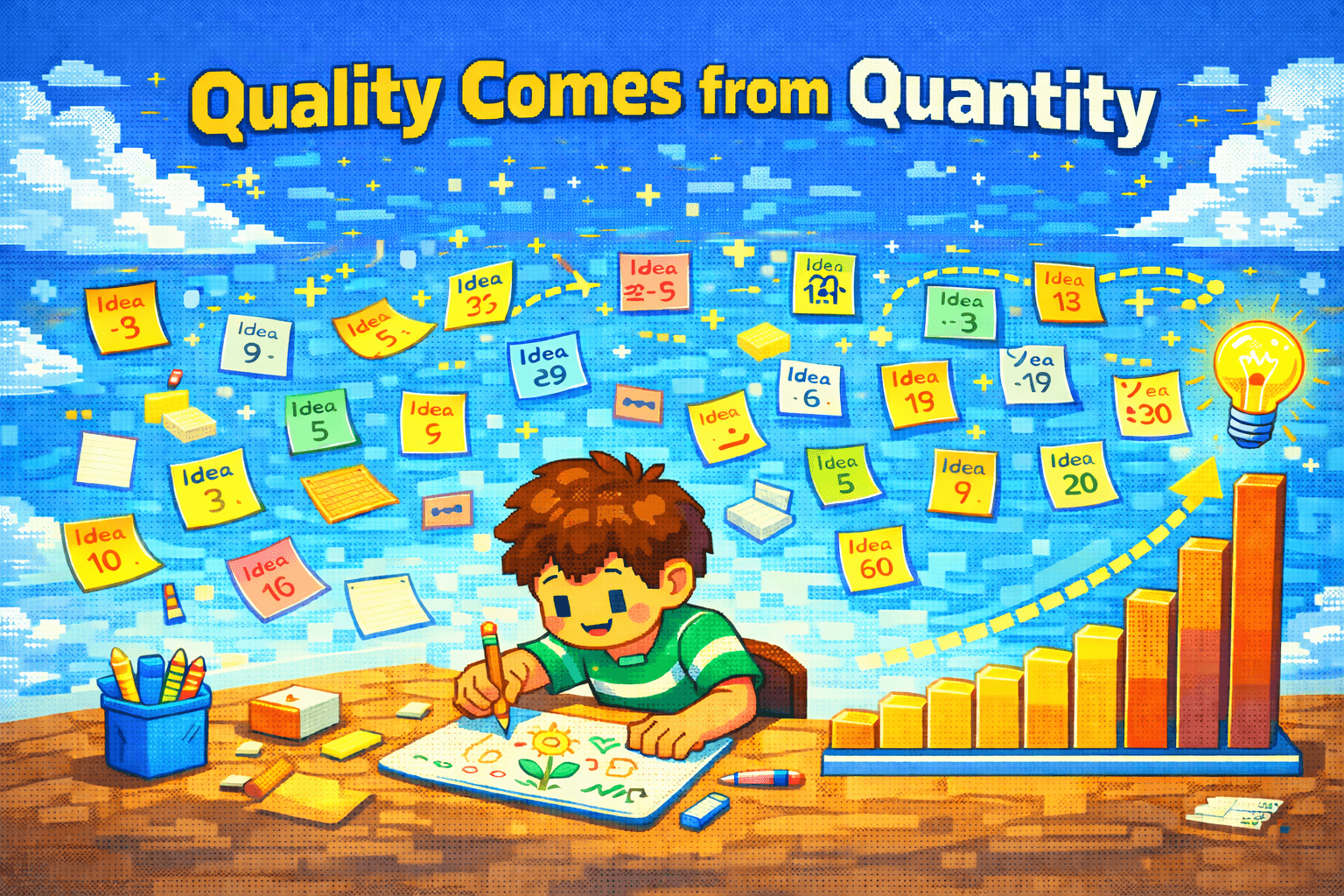
Quality comes from quantity. According to Stanford research, kids who focus on generating a high volume of ideas first see a massive 60% increase in their overall problem-solving capacity.
The Power of Idea Volume
Data from the Stanford REDlab has revealed a startling truth about how children learn to solve problems. Their research found that kids who practice a volume-first approach see a massive 60% increase in their problem-solving ability. This finding challenges the traditional way we teach children to think. Most of us were taught to stop and think deeply before we speak or act. While reflection is important, the Stanford study suggests that generating a high volume of ideas is actually the faster route to quality solutions.
The first strategy is often called divergent thinking. It is the ability to branch out and explore many different directions at once. When a child is encouraged to produce a hundred ideas in a single session, something magical happens. The first ten ideas are usually the obvious ones. The next twenty are a bit more interesting. By the time they reach idea number eighty, they are tapping into deep levels of original thought that they never knew they possessed.
Why Quantity Leads to Quality
The 60% boost in ability comes from the fact that quantity leads to quality. If you want to find one brilliant idea, you usually have to dig through a mountain of mediocre ones. Children who are comfortable with this process develop a high level of self-efficacy. They know that even if they are currently stuck, the answer is just a few more ideas away. This removes the stress of problem-solving and turns it into a game of numbers.
In a world that often rewards being right, the volume-first approach is revolutionary. It teaches children that their first idea is rarely their best idea. By giving themselves permission to produce a high volume of ideas, they bypass the internal critic that often stops innovation before it starts. This leads to a more fluid and flexible way of thinking that is essential for complex problem-solving.
Design Thinking in the Home
The research at Stanford focused on how design thinking can be applied to education. Design thinking is a process used by engineers and innovators to solve difficult challenges. It involves empathizing with the user, defining the problem, and then generating a vast number of potential solutions. The ideation phase is where the volume-first approach really shines. The more ideas a team generates, the more likely they are to find a breakthrough.
Implementing this at home is easier than you might think. During dinner, you can play a game where everyone has to come up with as many uses for a cardboard box as possible. Set a timer for three minutes and see who can reach twenty ideas first. Do not worry if some of the ideas are silly or impossible. In the world of divergent thinking, every idea counts. The goal is to keep the mental engine running at high speed.
Practical Creativity Exercises
Another practical exercise is the thirty circles challenge. Give your child a piece of paper with thirty empty circles on it. Ask them to turn each circle into a different object in just two minutes. They might turn one into a clock, another into a pizza, and another into a smiley face. The speed of the exercise forces them to stop judging their ideas and just keep moving. This is a perfect workout for the creativity muscle.
This research highlights why specialized environments like Taroo are so effective. By creating a space where children can iterate rapidly without the fear of a low grade, we are giving them the tools to master complex challenges. We are preparing them for a future where the ability to think critically and solve unique problems is the most valuable skill a person can have. A 60% increase in this ability is a life-changing advantage.
Rewiring the Brain for Innovation
When a child stops trying to find the one best answer and starts looking for fifty possible answers, their brain literally rewires itself for innovation. They become less afraid of difficult tasks because they have a proven system for tackling them. This is the difference between a child who gives up and a child who asks what else could work. By prioritizing volume, you are training your child to be a relentless seeker of solutions.
The psychological impact of this approach is also significant. When children see that they are capable of generating many ideas, their self-confidence grows. They realize that they have an internal resource they can rely on when things get tough. This reduces the feeling of being overwhelmed and replaces it with a sense of agency. They are the masters of their own creative process.
Building Skills for the Future Economy
In the year 2026, we are seeing a shift in what employers look for. They no longer just want people who can follow instructions. They want people who can think outside the box and find new ways to improve systems. The volume-first approach is the foundation of this kind of thinking. It prepares children for a world where the ability to innovate is the key to both personal and professional success.
As a parent, you can encourage this by celebrating the bad ideas just as much as the good ones. In fact, sometimes the silliest ideas are the ones that lead to the most interesting breakthroughs. By creating a safe space for all ideas, you are teaching your child that their imagination has no limits. This is how we raise the next generation of thinkers, makers, and leaders.
FAQs
What is Stanford REDlab?
It is a research group at Stanford University that studies how design thinking can improve education and learning outcomes.
Why is volume better than quality at first?
Starting with volume bypasses the internal critic that stops us from thinking of original, out-of-the-box ideas.
Can this help with school subjects like math?
Yes, it helps children think of different ways to approach a word problem or a difficult equation.
Is there a limit to how many ideas a child should generate?
There is no upper limit, but the goal is to reach a point where the obvious ideas are exhausted, and the original ones begin to surface.
How often should we do these volume-based exercises?
Even once or twice a week can make a significant difference in a child's creative fluency.
You may also like

Beat Builder: Free Rhythm & Music Printable for Kids Ages 6–10

How to Choose the Right Creative After-School Program for Kids Ages 6–10

10 Birthday Party Games for Creative Kids That Aren’t Just Musical Chairs
