Arjun Rakesh
TL;DR
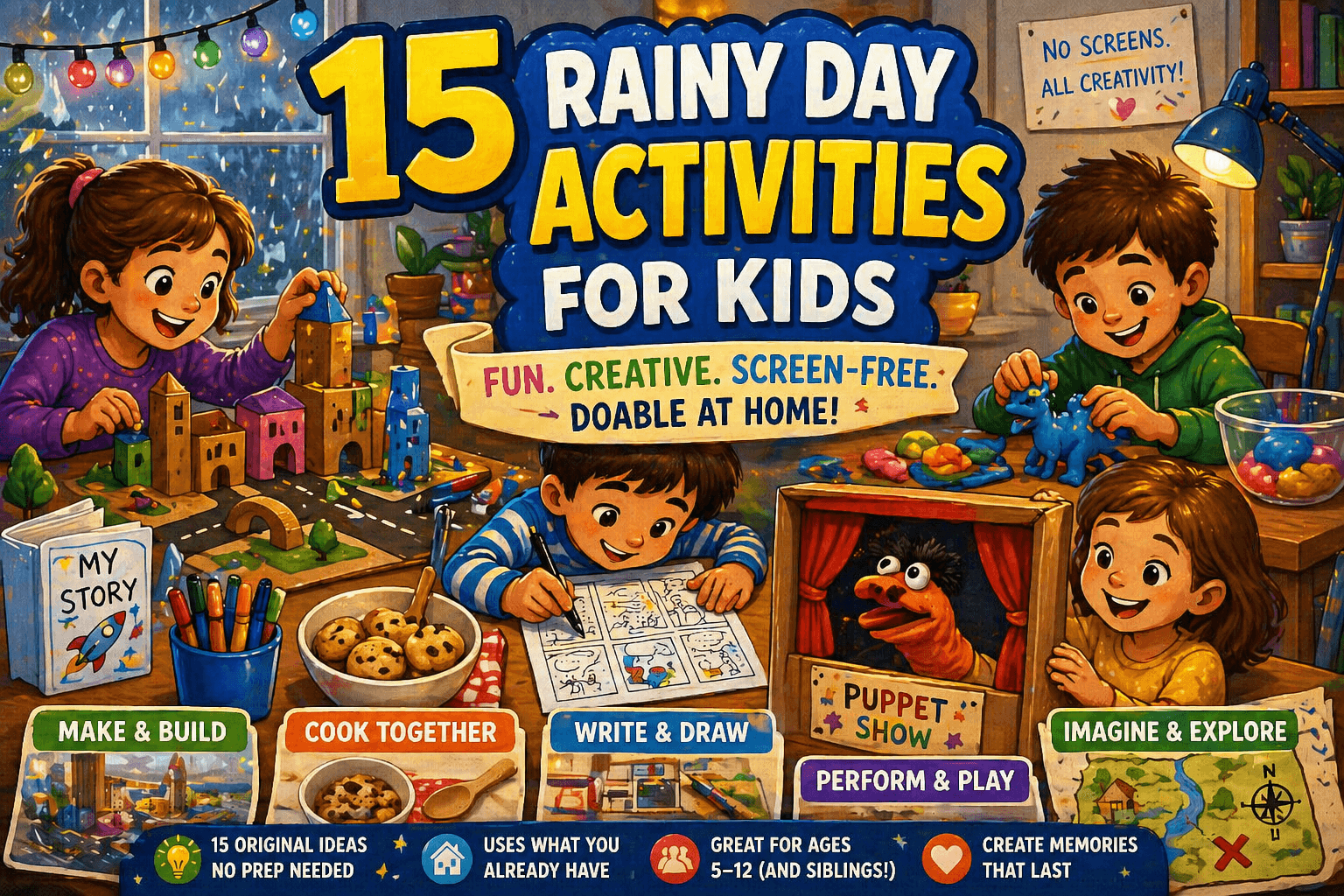
15 screen-free indoor activities using supplies most families already have at home
A mix of making, building, cooking, performing, and writing something for every type of kid
Open-ended by design: no “right” outcome, which keeps kids engaged longer than structured crafts
Includes the full playdough recipe and quick-start instructions for each activity
Works well across ages 5–12, with many activities adjustable for mixed-age siblings
A rainy day at home isn’t a problem to solve; it’s a creative window that doesn’t open all that often. The trick is having ideas ready before “I’m bored” arrives, because it always arrives faster than the rain. These 15 rainy day activities for kids skip the screens and land somewhere more interesting.
1. Build a Cardboard City
Save cereal boxes, toilet rolls, and packaging for this one. Give your child tape, scissors, and a cardboard base, and let them build. Add markers for windows, doors, and street signs. Cities tend to grow; don’t be surprised if this takes the whole afternoon.
2. Make a Folded Mini-Book
Take a single piece of paper, fold it into an 8-page booklet, and hand it over with crayons. Your child writes and illustrates their own story. The page limit is the point; it teaches them to choose what matters. Some kids make three or four in a row once they see how satisfying the finished product feels.
3. Blind Contour Drawing
Sit across from your child and take turns drawing each other without looking at the paper. The results are always funny and almost always better than expected. It loosens kids up about “being good at drawing” and gets them noticing details they’d normally skip.
4. Start a Comic Strip
Divide a sheet of paper into six panels and hand it over. Your child draws the story, and writing is completely optional. Comic strips teach visual storytelling naturally, and many kids find them easier to finish than prose because the structure is already there.
5. Make Playdough from Scratch
2 cups flour, 1 cup salt, 2 tablespoons cream of tartar, 2 tablespoons oil, 1 cup boiling water, and food coloring. Mix and knead. The process is the first activity. What they build with it is the second and usually the longer one.
6. Build a Marble Run
Tape cardboard tubes, toilet roll inserts, and strips of cardboard to a wall or door to create a marble run. Test it, adjust it, test again. Kids who do this are problem-solving and engineering without anyone calling it that.
7. Create a Family Newspaper
Your child is the editor. They interview family members, write headlines, draw photos, and lay it all out on paper. One issue can take an entire rainy afternoon. Some families have made it a monthly tradition.
8. Put on a Puppet Show
Old socks, paper bags, or cardboard on sticks, whatever’s available. Write a quick script, or don’t: improvised puppet shows are often better. Set up a table as a stage and recruit younger siblings as the audience.
9. Cook Something New Together
Pick a recipe your child has never made and let them lead as much of the process as they can manage safely. Cooking builds measurement skills, patience, and the particular satisfaction of producing something edible from scratch.
10. Design a Board Game
Give your child cardboard, markers, and a starting challenge: a beginning, an end, and something that can go wrong in the middle. The design process teaches systems thinking. Playing it teaches them to refine rules when something doesn’t work.
11. Draw a Neighborhood Map from Memory
Your child maps your street or neighborhood without looking anything up. How accurate is it? Compare it to what’s really there. Most kids find the gap between their mental map and reality genuinely interesting and often a little surprising.
12. Start a Nature Journal
Even from indoors, there’s plenty to record. A bird at the window, a plant on the sill, what the rain sounds like on different surfaces. If it’s not raining too hard, ten minutes outside produces material for thirty minutes of drawing and writing inside.
13. Write and Send a Letter
Your child picks someone, a grandparent, a friend, a cousin, and writes a real letter. Envelope. Stamp. Mail. The physical act of sending something through the post tends to feel genuinely exciting to kids, partly because it’s increasingly unusual.
14. Make Stop-Motion Animation
A phone, a flat surface, and small objects are enough. Your child positions them, takes a photo, moves them slightly, and takes another. Basic apps stitch frames together. The first finished clip, even ten seconds long, creates an immediate appetite for a longer one.
15. Hold a Living Room Concert
Your child picks songs, practices them, and performs for family, stuffed animals, or whoever will watch. Give them a few hours to prepare and treat the concert as a real event. Printed programs are optional but tend to appear anyway.
The screen will always be there. These indoor activities for kids tend to produce the kind of afternoon that gets remembered long after the rain stops.
Frequently Asked Questions
What supplies do I need for these rainy-day activities?
Most of these activities use materials you likely already have at home: cardboard boxes, paper, tape, and markers cover the majority of the list. The playdough recipe calls for flour, salt, cream of tartar, oil, and food coloring. The letter-writing activity requires a stamp and an envelope. None of these boredom busters for kids requires a trip to a craft store.
What age range works best for these activities?
Most work well across ages 5–12. Younger children tend to enjoy the open-ended physical activities, such as cardboard cities, playdough, and puppet shows. Older kids often take more ownership of the structured ones, like the family newspaper, board game design, or stop-motion animation. Cooking and letter-writing work well across a wide age range simultaneously.
How long do these activities typically last?
The open-ended construction activities, like cardboard city, board game design, and marble run, tend to run longest, often 90 minutes to a full afternoon. Blind contour drawing and the folded mini-book usually take 20–40 minutes. The living room concert, with preparation time factored in, can fill most of a rainy afternoon if your child takes it seriously.
What if my child gives up on an activity quickly?
Some activities need a few minutes to gain momentum before they become absorbing. If your child stalls, start building or drawing something yourself and let curiosity do the rest. The physical, hands-on activities like cardboard city, marble run have the lowest entry barrier because something starts happening immediately. Avoid hovering once they’ve found their footing.
You may also like

5 Best Sago Mini World Alternatives for Creative Play and Learning

Why Games Are a Great Starting Point for Storytelling, Music, and Drawing

Best Writing Games for Kids Ages 6–10: Fun Ways to Start Stories, Sentences, and Ideas
