Arjun Rakesh
TL;DR
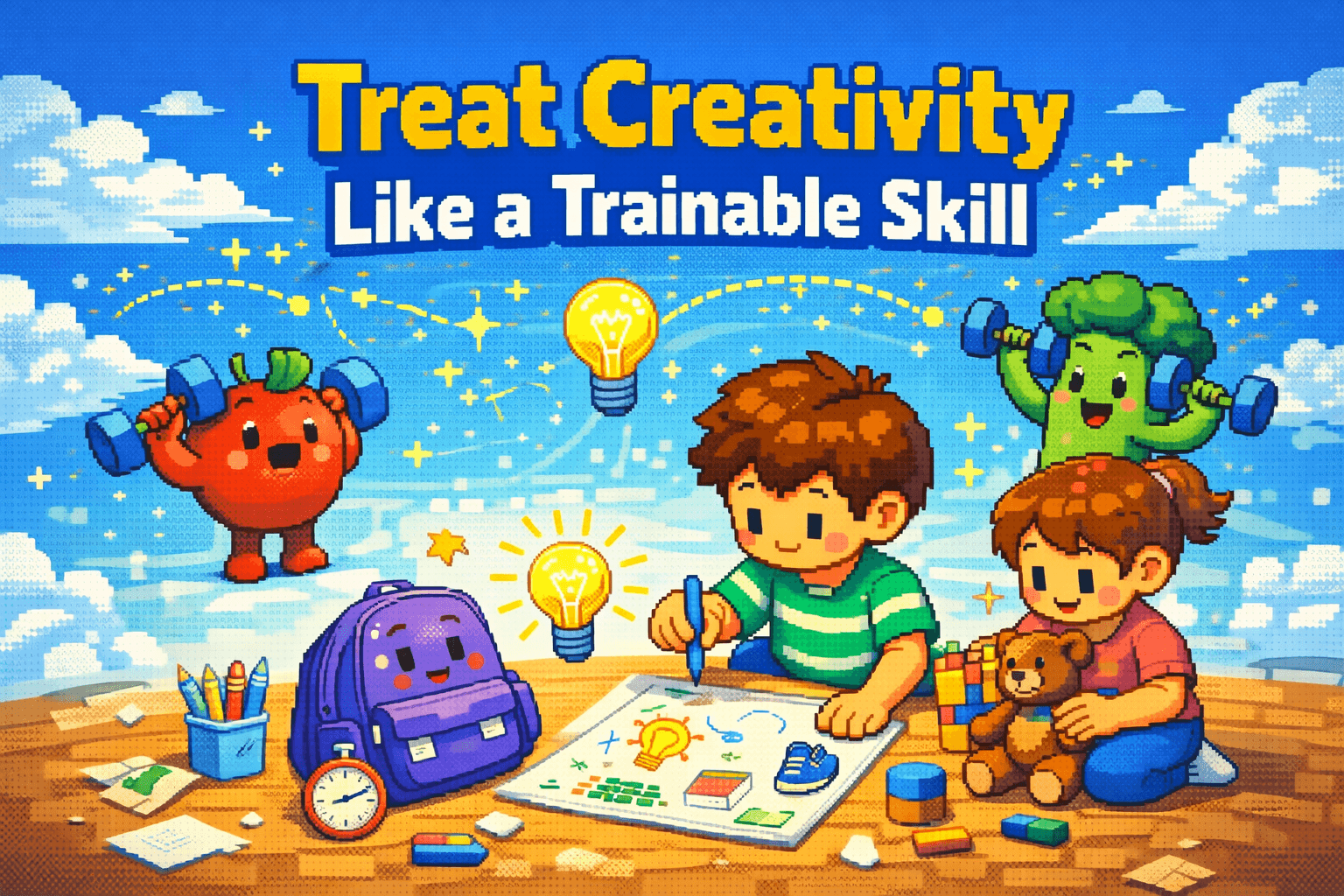
Creativity is a skill that strengthens with use. By shifting to a muscle mindset, parents help children build the resilience and innovation needed for a successful future.
Understanding Creativity as a Trainable Skill
Every parent remembers the first time their child picked up a crayon and drew what looked like a masterpiece to you. We often look at these early bursts of imagination and wonder if our children are born with a creative spark. Scientists and educators now realize that creativity behaves far more like a physical muscle than a mysterious inheritance. If you want your child to become a brilliant problem solver, you must help them exercise their imagination every single day.
The concept of a growth mindset has transformed how we approach education in 2026. We know that intelligence grows with effort. We understand that persistence leads to mastery in mathematics and reading. Many people still view creativity as a fixed trait. They believe a person is either artistic or they are not. This perspective is outdated and limits a child's potential. When we treat creativity as a muscle, we shift the focus from the final product to the process of regular exercise.
The Neuroscience of Mental Fitness
Muscles grow through resistance and repetition. The creative mind works in the exact same way. A child who practices coming up with new ideas daily will eventually find it easier to innovate when they face a real-world challenge. This is the core philosophy behind the most successful innovators of our time. They did not wait for a lightning bolt of inspiration. They sat down and worked their creative muscles until those muscles became strong enough to carry heavy ideas.
Neuroscience supports this idea of mental fitness. When a child engages in creative thinking, they are building new neural pathways. These pathways become stronger and more efficient every time they are used. Just as an athlete trains their body to respond to physical demands, a child can train their brain to respond to intellectual challenges. This training prepares them for a future where adaptability and original thought are the most valuable skills a person can possess.
Creating a Creativity Gym at Home
Parents can start this strengthening process at home with simple activities. Instead of asking your child to draw something perfect, ask them to draw ten different ways to use a spoon. The goal is the repetition itself. When a child realizes that they can generate ideas on command, their confidence soars. They stop fearing the blank page because they know their creative muscle is ready for the workout.
Consider the environment you create for your child. A gym provides the equipment and space needed for physical growth. Your home can serve as a creativity gym. Provide your child with open-ended tools. Cardboard boxes, building blocks, and art supplies with no instructions are excellent for this purpose. These materials force a child to use their imagination to create something from nothing. This is the ultimate form of resistance training for the mind.
The Power of Storytelling Workouts
Another way to flex this muscle is through storytelling. Ask your child to help you finish a story before bedtime. If a character is stuck in a cave, ask for five different ways they could escape. The more varied the solutions, the better the workout. You are teaching them that there is always a way forward if you are willing to think through multiple possibilities. This skill will serve them well in school and in their future careers.
Shifting Praise from Product to Process
Nurturing this ability requires a shift in how we praise our children. Focus on the effort they put into the brainstorming process rather than the beauty of the final result. Tell them you are proud of how many different solutions they found for a single problem. This reinforces the idea that the act of creating is the victory. Over time, this consistent practice builds a resilient mind that views every challenge as an opportunity to flex.
We must also be mindful of the use it or lose it principle. Just as muscles atrophy without exercise, the creative spark can dim if it is not regularly encouraged. Modern life provides many distractions that allow for passive consumption. Watching videos or playing games with fixed outcomes requires very little creative effort. Balancing this passive time with active, creative play is essential for healthy development.
Preparing for an Uncertain Future
In the year 2026, the world is changing faster than ever before. Many of the jobs our children will hold do not even exist yet. The one thing we can be certain of is that they will need to be creative. They will need to look at problems from new angles and find solutions that no one else has considered. By treating creativity as a muscle, you are giving them the strength they need to navigate an uncertain future.
You can also model this behavior in your own life. Let your child see you trying new things and thinking through problems out loud. If you are cooking a meal and realize you are missing an ingredient, ask your child for a creative substitute. Show them that even adults have to work their creative muscles to find solutions. This makes the process feel normal and achievable rather than something only special people can do.
Finally, remember that every child has a different starting point. Some children may find it easier to think of ideas than others at first. This is no different than some people being naturally more flexible than others. With consistent training, every child can improve their creative capacity. The goal is progress, not perfection. Keep the workouts fun and lighthearted, and you will see your child's imagination flourish in ways you never thought possible.
The muscle method is about consistency. It is about showing up every day to do the work of imagining. It is about understanding that the more you use your mind, the more powerful it becomes. When a child learns this lesson early, they carry a sense of agency with them for the rest of their lives. They know that they are the architects of their own brilliance.
FAQs
Can creativity really be learned?
Yes, research shows that creative thinking is a skill that improves with deliberate practice and environmental encouragement.
At what age is it best to start creativity training?
The earlier the better, but the 6 to 12 age range is a critical window for developing cognitive flexibility.
What if my child isn't interested in art?
Creativity is about problem-solving, not just art. It applies to coding, sports, and social interactions just as much as drawing.
How often should we practice these exercises?
Aim for a few minutes of creative play every day to keep the muscles active and strong.
Is screen time always bad for creativity?
Screen time can be creative if the child is actively building, designing, or problem-solving rather than just watching.
You may also like

Beat Builder: Free Rhythm & Music Printable for Kids Ages 6–10

How to Choose the Right Creative After-School Program for Kids Ages 6–10

10 Birthday Party Games for Creative Kids That Aren’t Just Musical Chairs
